
In China, many buildings are covered with air conditioner outdoor units, which not only detracts from the overall aesthetics of the architecture but also poses certain safety hazards. However, when tourists visit Japan, they are often surprised to find that air conditioner outdoor units are rarely seen on Japanese buildings. This is because the Japanese cleverly design air conditioner outdoor units indoors, usually placing them on balconies, and carefully concealing them from the outside, making these devices both safe and aesthetically pleasing.
One has to admire the Japanese for their meticulous consideration in installing air conditioner outdoor units. They cleverly place the units indoors, such as on balconies, and use surrounding shielding to reduce safety hazards and noise pollution. In contrast, some homeowners in China often experience conflicts and disputes due to noise and leaks from air conditioner outdoor units, while this Japanese design method cleverly resolves these issues.
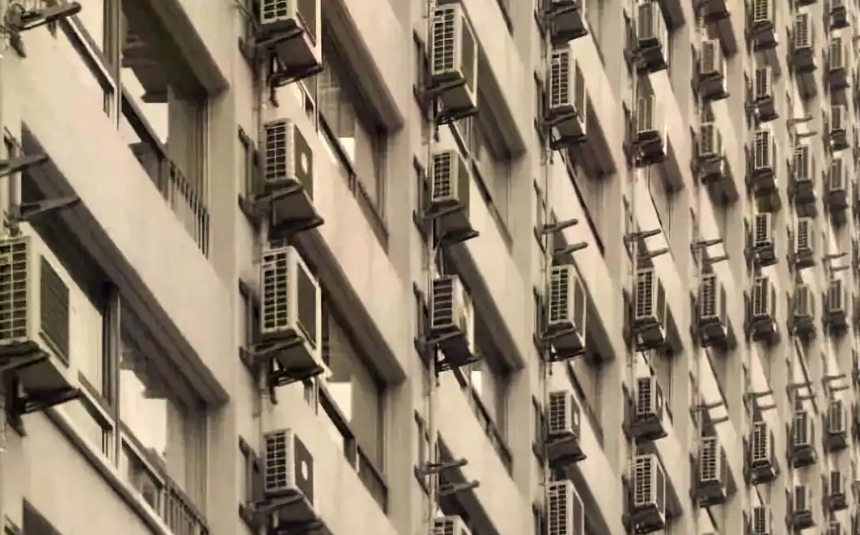
Compared to domestic practices, in China, many homeowners typically use iron brackets to support their air conditioner outdoor units, leaving them outdoors for extended periods. However, this practice presents several risks. Prolonged exposure to sunlight and rain can easily cause the outdoor unit to rust, shortening its lifespan and even leading to increased noise levels.
Advantages and Limitations
Although the difference between these two methods is simply indoors versus outdoors, a deeper examination reveals that this Japanese placement method does indeed offer numerous benefits. First, it significantly reduces the occurrence of various potential hazards. Second, this method effectively protects the air conditioner, extending its lifespan and thus reducing maintenance costs. Therefore, installing the air conditioner’s outdoor unit on the balcony is safer, making this a particularly important choice when purchasing a home.
Economic Development and Balcony Design
However, with soaring property prices, especially in first-tier cities like bustling Hong Kong, prices are now prohibitively high. Attentive observers may have noticed that Hong Kong apartments generally lack balconies, prompting the question: what are the reasons for this scarcity?
Hong Kong’s exorbitant property prices, even surpassing those of some major urban areas in mainland China, make it extremely difficult for many to purchase property there. Furthermore, Hong Kong apartments are typically compact and high-rise, making balconies a luxury given the limited land resources available. Not only are their practical uses limited, but they also occupy valuable space, making balconies a rare commodity in Hong Kong.
Solutions and Innovations
In Hong Kong, due to the scarcity of balcony space, many residents are unable to dry clothes on their balconies. To solve this problem, they typically choose washing machines equipped with dryers, which dry clothes directly after washing, thus eliminating the need for air drying. However, for items that do require air drying, such as quilts, they utilize public spaces like rooftops or stairwells.
It is evident that the placement of air conditioner outdoor units involves not only cultural considerations but also close ties to economic factors. Perhaps economic development can provide an effective solution to the various problems currently existing in the domestic air conditioner installation market. However, relying solely on economic incentives is insufficient; we also need the joint efforts of air conditioner installation professionals to jointly formulate and adhere to installation standards to achieve high-quality and efficient installation results.
In this regard, Wenger Craftsmanship, as an innovator in the industry, is committed to researching the application of new materials, technologies, and processes in air conditioner installation. We continuously explore, aiming to provide families with a warm and comfortable living environment. The Wenger brand, “Wenger Comfort Home,” was born out of this need, adhering to the core concept of “comfortable homes lead to healthy people,” and is dedicated to creating a healthy, comfortable, and happy home environment through four major systems: “temperature and humidity balance, healthy water supply, intelligent operation, and energy-saving sound insulation.”